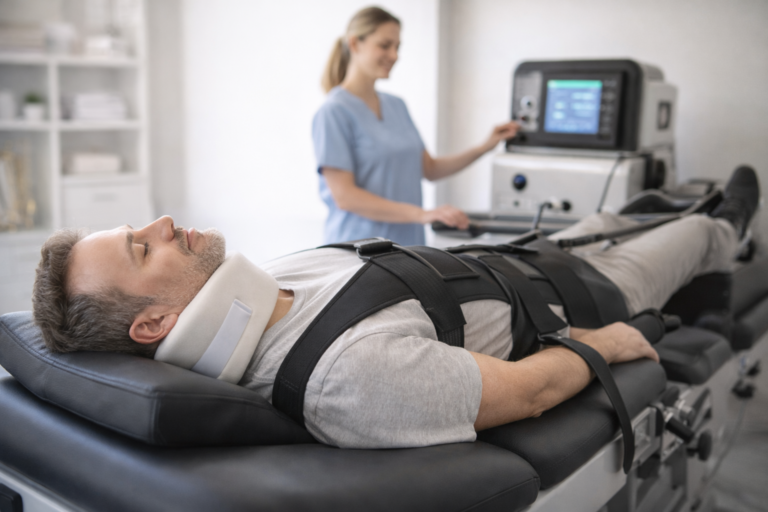
If you’ve been told you have a bulging disc, sciatica, or “nerve pressure,” you’ve probably run into the term spinal decompression therapy. In plain English, it’s a form of traction that gently pulls and unloads the spine with the goal of easing pressure on irritated joints, discs, or nerves.
At Herres Chiropractic in Pasco, WA, Dr. Matt Herres uses a “right tool for the right person” approach—because decompression can be helpful for some cases, but it’s not a universal fix, and it’s definitely not something you want applied without a proper evaluation.
What spinal decompression therapy is
“Spinal decompression” can mean two different things:
-
Non-surgical spinal decompression therapy (traction): Motorized or manual traction intended to create space and reduce compression in the spine.
-
Spinal decompression surgery: A surgical procedure used when conservative care isn’t enough.
This page is about the non-surgical therapy most people see advertised by chiropractic and rehab offices.
How non-surgical decompression works
Non-surgical decompression typically uses a traction table or device to apply controlled pulling forces. The idea is to temporarily reduce compressive load and calm irritated tissues.
A key reality check: the scientific literature on decompression devices (the “special tables”) has limitations, and evidence quality varies. One review noted there’s limited evidence to support routine use and raised concerns about how marketing claims can outpace research.
So—decompression can be a useful option, but it should be considered one part of a broader plan, not a standalone miracle.
Who spinal decompression therapy may help
In practice, decompression is most often considered when symptoms suggest compression-related pain, such as:
-
Sciatica / radiating leg pain
-
Pinched nerve (radiculopathy) symptoms
-
Disc bulge or herniation-related discomfort
-
Degenerative disc or facet-related irritation
-
Some cases of spinal stenosis (case-dependent)
Also worth knowing: some traction-based devices have FDA clearance as traction equipment for certain indications, but FDA “substantial equivalence” clearance isn’t the same thing as proving the treatment will work for everyone.
Risks, side effects, and who should avoid it
Non-surgical decompression is generally considered low-risk when appropriately selected and supervised—but traction isn’t for everyone.
People who may not be candidates include those with conditions that weaken bones or affect the spinal cord (examples listed in medical guidance for traction include osteoporosis, spinal tumors, osteomyelitis, myelopathy, aneurysms), and certain situations like pregnancy or prior cervical fusion (for cervical traction).
Possible side effects can include temporary soreness, symptom flare-ups, or muscle spasm—usually a sign the force, angle, or dosage needs adjustment.
What to expect at Dr. Herres’s office
Dr. Herres doesn’t start with a machine—he starts with an evaluation.
A typical first visit includes:
-
Your history (what happened, what makes it worse/better, what you’ve tried)
-
Movement and orthopedic testing
-
Neurological screening if symptoms suggest nerve involvement
-
A clear recommendation: decompression vs. other conservative options vs. referral if needed
If decompression makes sense, it’s usually paired with a plan that supports longer-term results—think mobility work, posture guidance, and staged strengthening. (Translation: we don’t just “stretch your spine and hope.”)
How long does decompression therapy take?
It depends on what’s causing your symptoms, how long you’ve had them, and how your body responds. Research and clinical protocols vary widely, and that’s one reason a personalized plan matters.
A good rule: you should see measurable change (pain pattern, range of motion, daily function) within a reasonable trial period. If you’re not progressing, the plan should change.
When to get checked urgently
Don’t “wait it out” if you have red-flag symptoms like:
-
Progressive weakness
-
New numbness in the groin/saddle area
-
Loss of bowel/bladder control
-
Severe worsening pain after injury
Those situations require prompt medical evaluation.
Ready to find out if decompression is a fit?
If you’re considering spinal decompression therapy and want a clear, conservative plan, Dr. Matt Herres can evaluate your case and tell you whether decompression is appropriate—or if another option is smarter.
Herres Chiropractic
7007 Burden Blvd. Ste. 104, Pasco WA 99301
509-543-1123
Book Your Appointment
Contact us today for your wellness chiropractic consultation.
