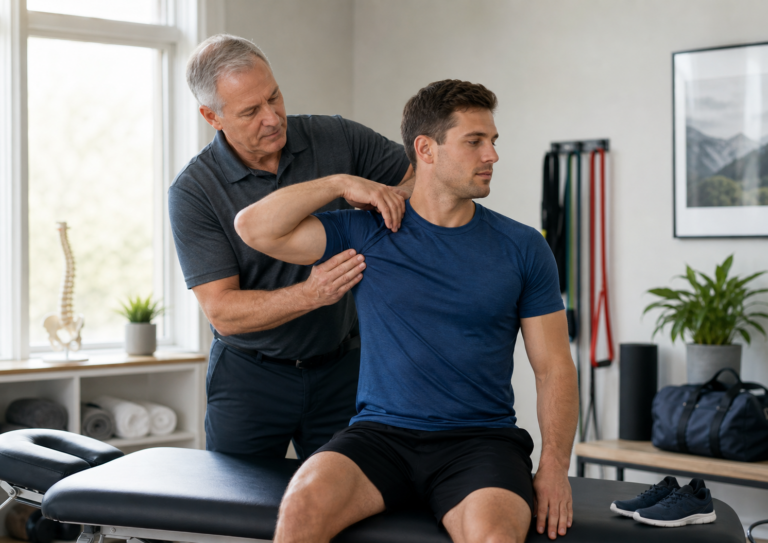
A chiropractor for sports recovery may help athletes improve mobility, reduce musculoskeletal pain, and support recovery after training or minor sports-related injuries. Chiropractic care is most relevant when the problem involves joints, muscles, soft tissues, or movement restrictions that interfere with training and function. Cleveland Clinic lists pain reduction and improved range of motion among the common goals of chiropractic adjustment, and its chiropractic services describe use for issues such as strains, sprains, running injuries, and plantar fasciitis.
For athletes, the main question is usually not whether chiropractic exists. It is when it makes sense inside a real recovery plan. In most cases, it helps most when the issue is mechanical or movement-related, not when there is a major traumatic injury that needs imaging, immobilization, or surgical evaluation. Return-to-play guidance from AAOS emphasizes protecting the athlete’s health, minimizing risk, and using evaluation, treatment, rehabilitation, and safe progression back to sport.
If you are dealing with a sports injury or recurring training-related pain, you can schedule an appointment with Dr. Matt Herres.
What a Sports Recovery Chiropractor May Help Address
A sports recovery chiropractor may be helpful when an athlete is dealing with:
- low back pain related to movement
- neck or upper back stiffness
- joint restriction
- muscle tightness
- mild strains or sprains
- repetitive training stress
- running-related biomechanical issues
- plantar fasciitis or similar overuse problems
Those are the cases where chiropractic tends to fit best. Cleveland Clinic describes chiropractic adjustment as a treatment that can reduce pain and improve motion, while AAPMR describes functional rehabilitation as a process that restores performance through strength, flexibility, agility, and coordinated movement.
Low Back Pain and Movement Restriction
Low back pain is one of the strongest areas for this kind of care.
NCCIH says spinal manipulation may be helpful for both acute and chronic low back pain, although it does not clearly outperform every other option. That matters because athletes with low back pain often do best when care is combined with rehab, exercise, and load management rather than treated as a stand-alone solution.
For a runner, lifter, field athlete, or active adult, the most relevant cases are usually the ones that feel mechanical. Stiffness, restricted motion, or pain with movement may respond better than injuries involving major instability or trauma.
Neck, Back, and Joint Stiffness
Not every athlete has a dramatic injury.
Some are dealing with reduced mobility, recurring tightness, or joints that do not move well after training. In these cases, chiropractic care may help improve motion and make rehab progressions easier to tolerate. Cleveland Clinic notes that chiropractic adjustment is used to improve range of motion in the spine and other joints and to address minor neck or spine injuries.
This is often where sports recovery care is most practical. The goal is not just to “feel cracked” and leave. The goal is to restore movement quality so the athlete can train, lift, run, or rehab more effectively.
Overuse Patterns and Minor Sports Injuries
Chiropractic may also fit well when the issue is repetitive stress rather than a major tear or fracture.
Cleveland Clinic’s chiropractic services describe support for muscle strains, ligament sprains, running injuries, plantar fasciitis, and postural strain. These are all examples of problems that can slow training even when they do not qualify as major trauma.
In those cases, the best results usually come when treatment supports an active recovery plan. AAPMR’s rehabilitation guidance emphasizes that return to full participation depends on rebuilding strength, flexibility, agility, and coordination, not just reducing pain for a day or two.
Running Recovery and Repetitive Load Problems
Runners often deal with recurring tightness and load-related irritation.
Feet, calves, hips, hamstrings, and the low back can all become part of the same chain. When mobility loss or repetitive stress is limiting recovery, chiropractic may help as one part of the plan, especially when combined with strengthening and movement correction. Cleveland Clinic specifically includes running injuries and plantar fasciitis among the types of problems chiropractic may help address.
This is one reason the phrase sports recovery chiropractor makes sense. The focus is not only injury treatment. It is also helping the body move better while training volume, tissue stress, and recovery demands are being managed.
When Chiropractic Is Less Likely to Be Enough
Chiropractic is not the full answer for every sports injury.
If an athlete has a suspected fracture, dislocation, major ligament tear, significant swelling, inability to bear weight, or worsening neurological symptoms, a higher level of evaluation is usually needed first. Return-to-play guidance emphasizes that decisions should be based on health status, participation risk, and restoration of sport-specific function, not just symptom reduction.
In simple terms, chiropractic may help the athlete who is stiff, restricted, or mechanically irritated.
It is much less likely to be the right first answer for a major traumatic injury.
The Best Sports Recovery Plan Is Active
The best recovery plans are not passive.
AAPMR describes functional rehabilitation as a process that uses strength, flexibility, agility, coordination, and progressive activity to help a person return to full participation. That means effective sports recovery usually includes more than one tool.
A strong plan often includes:
- a clear diagnosis
- movement assessment
- pain management
- mobility work
- strengthening
- progressive return to activity
- return-to-sport criteria
This is where chiropractic can be useful. It may help reduce pain and improve movement, which can make the rest of rehab work better.
Can Chiropractic Improve Athletic Performance?
That question needs a careful answer.
The clearest evidence is around musculoskeletal pain and movement, not guaranteed performance boosts. Cleveland Clinic focuses on benefits such as reduced pain and improved range of motion, while NCCIH’s reviews support a role for spinal manipulation in some musculoskeletal conditions without claiming it is clearly superior to all other approaches.
So the better answer is this:
Chiropractic may improve performance indirectly when it helps an athlete move better, train with less pain, and progress through recovery more normally.
When Athletes May Benefit Most
A chiropractor for sports recovery may be most helpful for:
- athletes returning from minor strains or sprains
- runners with recurring mobility or load issues
- lifters with mechanical low back or hip tightness
- athletes dealing with joint restriction
- active adults whose pain flares with training
These are the situations where mobility, pain reduction, and recovery support often matter most.
If the problem is severe trauma, instability, or suspected structural damage, sports medicine or orthopedic evaluation usually matters more first.
FAQ
Does a chiropractor help with sports recovery?
It can help when the issue is musculoskeletal and movement-related, especially with stiffness, overuse patterns, strains, sprains, or joint restriction.
When does chiropractic help athletes most?
Usually when the problem is mechanical, not highly traumatic. It tends to fit best when the athlete needs better mobility, less pain, and support during rehab or return to training.
Is chiropractic enough for a sports injury?
Sometimes for milder cases, but not always. Many athletes need a broader recovery plan that includes rehab, strengthening, and return-to-sport progression.
What injuries need more than chiropractic care?
Suspected fractures, dislocations, major ligament tears, significant swelling, inability to bear weight, and worsening neurological symptoms usually require more formal medical evaluation.
Final Thoughts
A chiropractor for sports recovery may help athletes most when the issue is related to movement, mechanical pain, overuse, or minor soft-tissue dysfunction.
The best results usually happen when chiropractic care supports a larger recovery strategy instead of trying to replace it. For athletes in Pasco looking for help with training-related pain, mobility loss, or sports recovery support, you can book a visit with Dr. Matt Herres.
